THUMB ARTHRITIS
What is it?
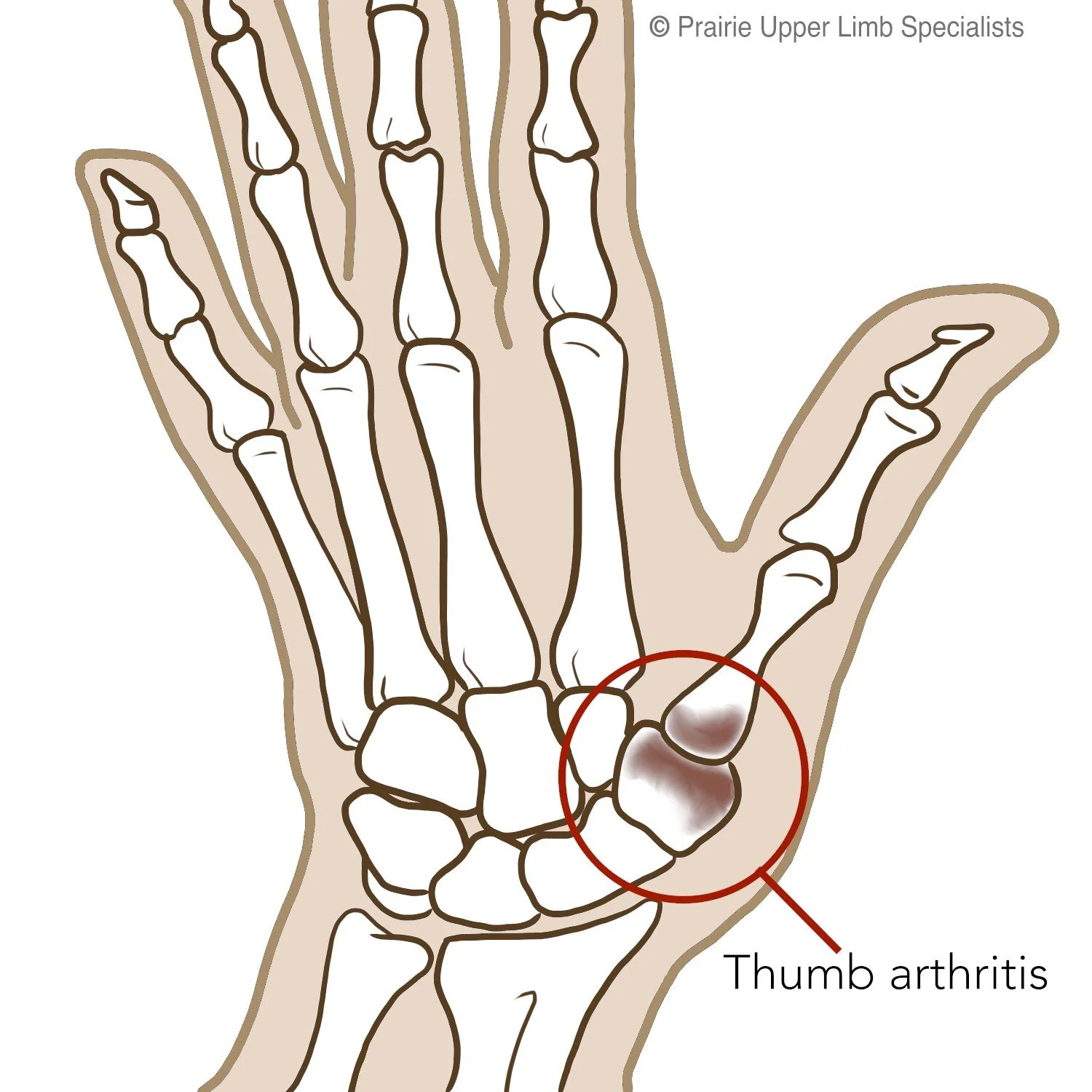
Thumb osteoarthritis is a wear and tear condition of the base of the thumb. Although arthritis can affect all joints of the thumb, this article will only discuss arthritis of the joint that attaches the thumb to the wrist (CMC joint). It is the most common problem people encounter with their thumb.
What are the symptoms?
Thumb arthritis may not cause any pain and be only an x-ray finding. For many, thumb arthritis causes pain at the base of the thumb that can shoot down the thumb. It can be a dull ache or sharp with use. It is often tender to touch. It can cause swelling. It tends to hurt the most when gripping large objects, like opening a jar.
What causes it?
The cartilage of the basal thumb joint can wear out with time. It is a high stress area of the hand with gripping. The lack of cartilage can lead to inflammation of the joint, which usually causes pain. It is more commonly painful in the 50s to 70s, but can affect younger people as well.
How is it treated?
Generally this is treated without surgery. The most effective initial treatment is to wear a brace during the day while active. Bracing relieves the forces on the joint and decreases inflammation and pain. The brace should wrap around the hand and support the thumb without immobilizing the wrist. Braces do not work for everyone and sometimes only lessens the symptoms. Cortisone injections are a very effective treatment. They can be done with or without an ultrasound or x-ray. It will cure some patients, but not everyone. We recommend that everyone try a cortisone injection before considering surgery. Other treatments include oral medications such as acetaminophen (Tylenol), NSAIDs (Ibuprofen, Naproxen, etc.), or local skin treatments (Voltaren, etc.) Occupational therapists, physiotherapists, or other practitioners can also be quite helpful in the treatment. For many patients, the arthritis will stop hurting after a period of time. Most patient do not have surgery for this condition.
Description of Surgical Treatment
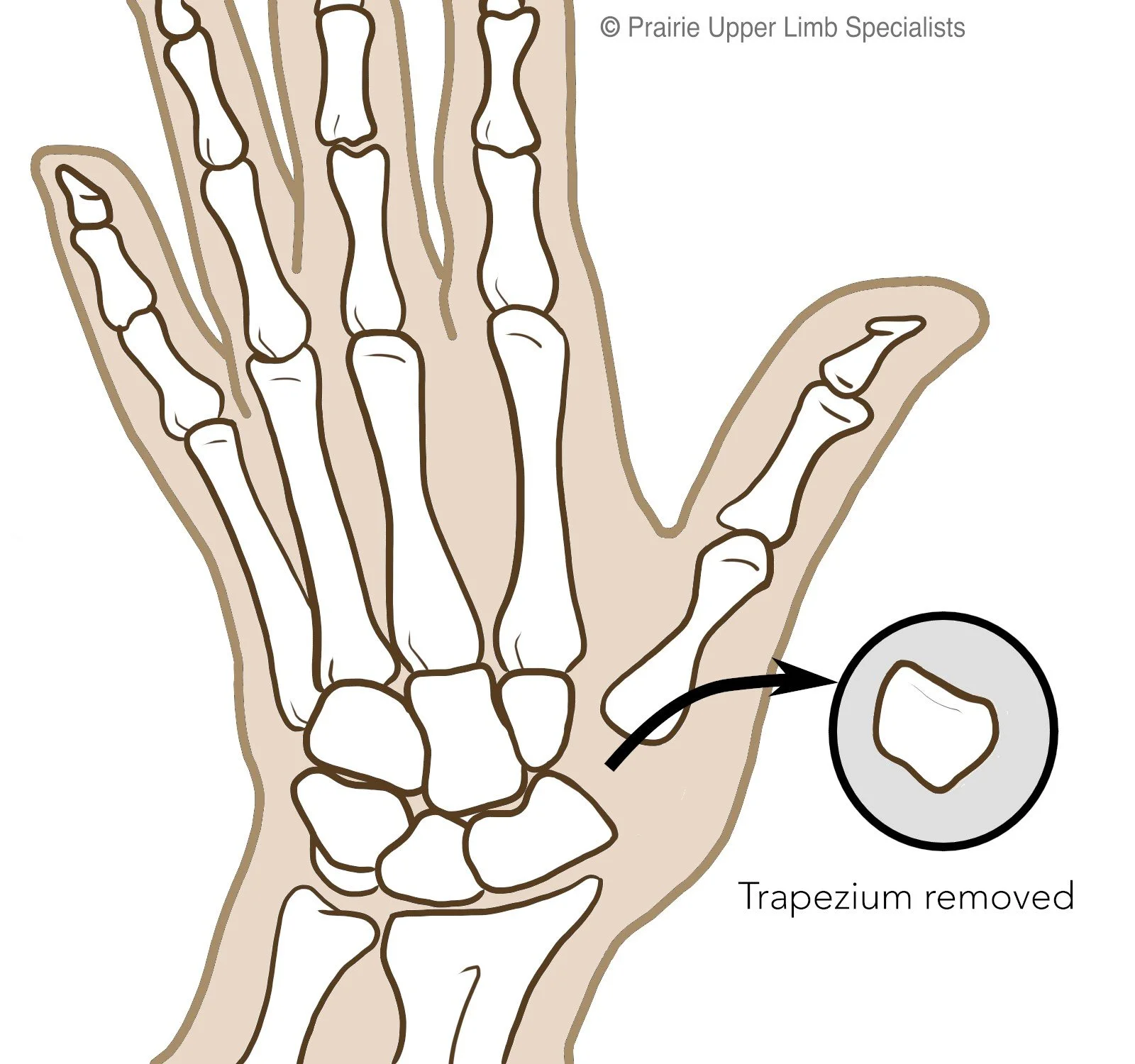
For patients that can not treat this condition by the usual treatments, surgery is often successful. Surgery is a procedure performed in the hospital with no overnight stay. The arthritic bone (trapezium) is removed. Once the bone is removed, the arthritic joint no longer exists, and pain usually decreases. We cast the hand for 6 weeks after the procedure. The hand will be sore for 3 – 12 months after. Everyone heals at a different rate. Most people are back to most activities by 4 months.